Sikkim Beyond Gangtok: Hidden Gems You Must Explore


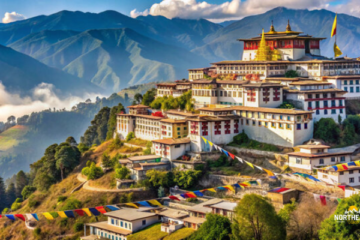
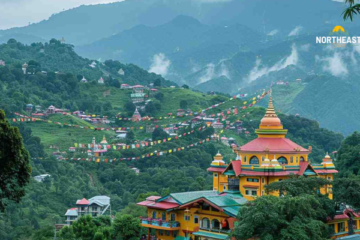
Gangtok is usually the first place that travellers think of when they hear the name Sikkim. But beyond the busy markets and cafés of the city lies a very different Sikkim, one with holy lakes, monasteries that are hundreds of years old, and mountain villages that still live in the way they always have. This blog shows you the secret side of Sikkim by combining research-based information with the eye of a traveller to find places that you should put on your map.
Yumthang Valley – What a Beautiful Valley
Yumthang Valley is in North Sikkim and is about 3,500 meters above sea level. For good reason, it’s called the “Valley of Flowers.” In the spring, rhododendrons, primulas, and iris flowers cover the hills in bright shades of colour. A sanctuary for over 20 kinds of rhododendrons is in the valley, which is part of the sanctuary.
A gentle stream flows through the valley, with snow-covered hills on either side. Yumthang Hot Spring is close by. People in the area think that its high sulphur content can heal them.
April through June is the best time to go because the valley turns into a natural flower show.
Thoughts from a traveller: It’s very quiet here because the air is so thin and clean. Bring light woollens even in the summer, because the weather gets very cool after dark.
Gurudongmar Lake, which is 17,800 feet high, is a spiritual mirror
It takes about three hours to drive north of Yumthang to reach Gurudongmar Lake, which is one of the world’s largest freshwater lakes. It stays cold for most of the year because it is close to the Tibetan Plateau.
Guru Padmasambhava, the founder of Tibetan Buddhism, is said to have blessed the lake many years ago. Even in the winter, a small part of it never freezes, which is something that both locals and monks respect.
When you stand on the edge of it and look at the turquoise water mirroring the flying prayer flags, you’ll feel both the height and the awe all at once.
Travel tip: You must get used to the altitude of the lake (above 5,000 meters) before you go. Before you go, stay at least one night in Lachen or Thangu.
Yuksom was the first capital of Sikkim
Yuksom in West Sikkim has more history than its quiet lanes would lead you to believe. It was built in 1642 and was Sikkim’s first city. It was also where the first Chogyal (king) was crowned. The Dzongri and Goecha La treks begin in this small town. These are two of India’s most beautiful Himalayan tracks.
Important places to see:
Dubdi temple is the oldest temple in Sikkim
It was built in 1701
- In Norbugang, the first king was crowned on a stone stage set under a pine tree.
- Karthok Lake is a holy body of water that is ringed by prayer flags and stories from the area.
“Slow travel” is what Yuksom is all about. Listening to the streams, the prayer wheels, and the pace of mountain life is more important than seeing all the sights.
Faith and different points of view meet in Pelling
Pelling is only a short drive from Yuksom and has both beautiful nature and a deep faith. Looking at it from this point of view, the Kanchenjunga range seems very close.
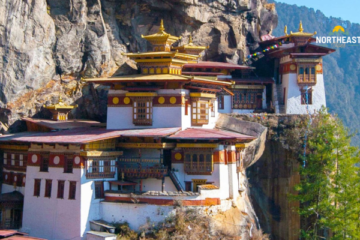
Most people come to see Pemayangtse Monastery, which was built in the 1700s and is famous for its detailed wooden sculpture called “Zangdok Palri.” This three-dimensional model shows where Guru Padmasambhava lives in heaven. The holy Khecheopalri Lake is just outside of Pelling. Locals say that not even a leaf is allowed to float in the water because birds pick them off to keep it clean.
Singapore’s Singapore Bridge is one of the tallest suspended bridges in Asia.
Rabdentse Ruins are what’s left of Sikkim’s second city. They are now covered in moss and history.
If you get up early, go to the Helipad area—it’s one of the best places in Sikkim to see the sunrise.
History on a Curvy Road: Zuluk and the Old Silk Route
Zuluk is a small village on the eastern edge of Sikkim that was once a stop on the Old Silk Route that linked Tibet and India. With more than 30 sharp hairpin turns, the road that leads here is an adventure in and of itself.
Zuluk has a unique mix of excitement, history, and beautiful scenery. From the Thambi View Point, which is above the town, you can see all of Kanchenjunga. The views are especially beautiful at sunrise, when the peaks turn golden.
From the inside: Traders who used to bring silk, salt, and wool through the Himalayas still tell stories about this path. People from this area run a lot of homestays and love to tell stories over a cup of hot tea.
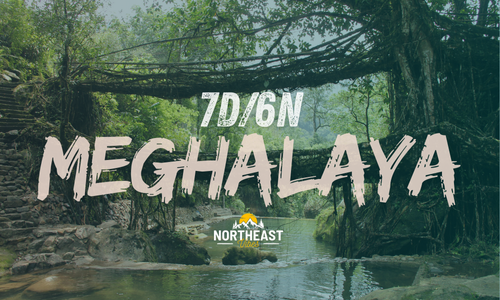
7 Days – 6 Nights – Package Tour
Meghalaya Taxi Tour 7Days/6Nights Places Covering: Shillong, Cherrapunji, Mawlynnong, Kerangsuri and Guwahati (Complete Taxi Tour with professional Driver cum guide) Including Tolls, Parking, Fuel and Driver’s Night Allowance.

7 Days – 6 Nights – Package Tour
Meghalaya & Kaziranga Taxi Tour 7 Days/ 6 Nights Kaziranga, Shillong, Cherrapunji, Dawki, Kerangsuri and Guwahati (Complete Taxi Tour with professional Driver cum guide) Including Tolls, Parking, Fuel and Driver’s Night Allowance.

9 Days – 8 Nights – Package Tour
Trekking Special Taxi Tour 9Days/8Nights Covering: Shillong, Cherrapunji, Double Decker living Root Bridge, Mawlynnong, Bamboo Trekking & Kerangsuri Including Tolls, Parking, Fuel and Driver’s Night Allowance.

12 Days – 11 Nights – Package Tour
Meghalaya + Kaziranga + Arunachal Taxi Tour 12Days/11Nights Shillong, Cherrapunji, Mawlynnong, Guwahati, Kaziranga, Bomdila, Tawang, Diranga Including Tolls, Parking, Fuel and Driver’s Night Allowance.
Khangchendzonga National Park is a UNESCO World Heritage Site in Sikkim
The Khangchendzonga National Park is a UNESCO World Heritage Site and a nature reserve. It covers almost 1,800 square kilometres. Not only do snow leopards, red pandas, and musk deer live there, but the people of Sikkim also consider the whole mountain range to be the home of guardian gods.
The park has both spiritual and ecological value, and it represents the balance between people and wildlife that makes Sikkim unique. This park is part of the trekking routes between Yuksom and Dzongri. From these paths, you can see glaciers, waterfalls, and rare alpine plants.
Sikkim is quieter than Gangtok. It’s a place that makes you want to think as well as explore. The point is to feel the beat of a place where faith, nature, and culture all blend together naturally.
Mountain ranges in Sikkim don’t just stand there; they talk. You just need to slow down for a while.