Why Bhutan is the Happiest Place on Earth: A Cultural Journey


While many people associate progress with tall buildings, rising stock indices and ever-increasing consumption, the Kingdom of Bhutan has taken a different path. Located in the eastern Himalayas, this small landlocked country is now known as a place where happiness is more than a state of being but a pursuit. Culturally, communally, and with purpose, Bhutan has become a leader in collective happiness and wellbeing, and, as many acknowledge, this journey is one that can be appreciated. In what follows, we are interested in exploring what, why and how Bhutan made its cultural journey to become the “happiest place on earth”.
Putting the Stakes on What Matters
From an authoritative angle, Bhutan’s stance is evidence- and policy-based. The Gross National Happiness (GNH) Index was conceptualised in Bhutan in the early 1970s during the reign of King Jigme Singye Wangchuck, with the famous remark that “happiness is more important than GDP.”
The OECD states that the GNH Index “uses a multidimensional, equitable, plural and policy relevant lens on happiness and wellbeing”, measuring nine domains (psychological wellbeing; health; education; time-use; cultural diversity and resilience; good governance; community vitality; ecological diversity & resilience; living standards).
In summary, Bhutan does not treat happiness as a by-product; it treats it as an end and as such, its endeavour is supported by expert research and institutional commitment to the cultural journey.
Culture as Anchor
The culture of a nation operates like its root system, the values, traditions and ways of being that create daily life. In Bhutan, culture is interlaced in national identity in ways that cultivate community, nurture continuity, and bring meaning.
For instance, as an example of the dress code (men wear “gho” and women wear “kira”) – apart from style, the code incorporates a level of belonging and equality. Perhaps as one tourism commentary stated, “by valuing and safeguarding its rich heritage, Bhutan establishes a strong sense of community and belonging.”
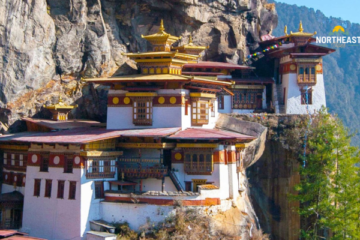
The yearly calendar also includes festivals and religious ceremonies, or “tshechus”, where time is spent together experiencing shared moments of music, cultural mask dances, and gathering. Taken together, these experiences serve to promote interdependence, as well as collective joy and memory – demonstrating that there is more than the individual.
The education system also contributes to this sustained culture, as lessons include timeless values, mindfulness, and nature. One study of GNH in Bhutan stated that “the relationship among employers and employees…suggests that the Buddhist concept of ‘Happiness’ as envisioned by GNH has successfully achieved its policy objectives.”
Taken together, each of these cultural layers contributes to setting a social ethos in which material/objective success matters less than quality of life, connection, community and meaning.
Harmonious With Nature
In Bhutan, nature is not an afterthought to the country—it is at the center of it. Forests, rivers, mountains, and animals are included in the Bhutanese national narrative. One of the policy documents specifically mentions that one of the four pillars of GNH is environmental conservation, while the constitution mandates that the forests be at least 60% of the country’s land cover.
From tourism-based sources: “over 70% of Bhutan is forested, the government actively promotes sustainable agriculture, forestry, and tourism.”
When humans live alongside nature—seeing themselves as part of a whole instead of the whole being their master—a strong sense of place and purpose may develop. To know your land matters, your environment is to be conserved, not used, and your well-being is beyond mere consumption; all of that is part of realising sustainable happiness and not just temporary pleasure.
Governance, Development & Balance
Culture and nature are important, just as governance and development are. What is different in Bhutan is that national policy explicitly links governance, culture and wellbeing under the auspice of GNH, or Gross National Happiness.
The four pillars of GNH are:
- Sustainable and equitable socio-economic development
- Conservation of the environment
- Preservation and promotion of cultural values
- Good governance
This means that every major policy—whether it is for infrastructure, education, tourism or health—has to be considered in terms of its consequences on all four. Even if a policy would contribute to increased GDP, but would hurt the environment, or diminish culture, it is certainly adjusted, or perhaps even rejected.
There is something powerful in a system that acknowledges: we are going to measure progress with more than money. When there is that powerful, implicit trust, that trust stimulates collective buy-in to knowing that the government cares not just about growth but considers the citizens overall quality of life.
A Living Example of Everyday Happiness
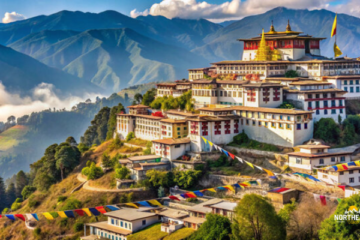
What is it like to experience this cultural journey on the ground? Consider a Bhutanese village: children are in school, wearing traditional dress, studying maths, but also learning how to love their forest. Every household is not just a household but part of the fabric of the community. Festivals provide opportunities for youth and elders to gather together in non-commercial forms of celebration of identity. You will see hikers hiking mountain trails, and hardly ever feel like a tourist, seeing land itself at an intimate level rather than a commodity. In the city of Thimphu, government officials are considering GNH along with economic indicators– and contemplating that individual’s well-being is not extra to the equation but a reason for being. Scholars researching Bhutan’s paradigm have described it as “shifting attention away from mindless growth… towards a common goal of human happiness and the well-being of the world.”
Why It Resonates
On one hand, Bhutan’s approach resonates because it connects with a profound human desire: to be well, to belong, and to be more than a consumer. On another hand, it resonates because it demonstrates that policy can have values—not just profit. When culture, nature, governance, and wellbeing are integrated, the sense of purpose generates a greater sense of happiness.
And lastly, Bhutan resonates because it is clear that happiness involves multiple domains: psychological wellbeing, time use (having time for relationships and time to reflect), community vitality, cultural vitality, environment—these are as meaningful as health, living standards or education is. The nine domains of GNH express that.
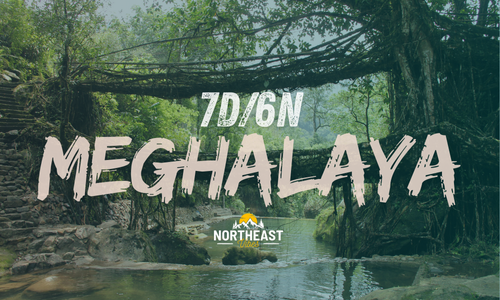
7 Days – 6 Nights – Package Tour
Meghalaya Taxi Tour 7Days/6Nights Places Covering: Shillong, Cherrapunji, Mawlynnong, Kerangsuri and Guwahati (Complete Taxi Tour with professional Driver cum guide) Including Tolls, Parking, Fuel and Driver’s Night Allowance.

7 Days – 6 Nights – Package Tour
Meghalaya & Kaziranga Taxi Tour 7 Days/ 6 Nights Kaziranga, Shillong, Cherrapunji, Dawki, Kerangsuri and Guwahati (Complete Taxi Tour with professional Driver cum guide) Including Tolls, Parking, Fuel and Driver’s Night Allowance.

9 Days – 8 Nights – Package Tour
Trekking Special Taxi Tour 9Days/8Nights Covering: Shillong, Cherrapunji, Double Decker living Root Bridge, Mawlynnong, Bamboo Trekking & Kerangsuri Including Tolls, Parking, Fuel and Driver’s Night Allowance.

12 Days – 11 Nights – Package Tour
Meghalaya + Kaziranga + Arunachal Taxi Tour 12Days/11Nights Shillong, Cherrapunji, Mawlynnong, Guwahati, Kaziranga, Bomdila, Tawang, Diranga Including Tolls, Parking, Fuel and Driver’s Night Allowance.
As Bhutan moves further into the twenty-first century, the cultural journey toward sustained happiness continues. Tourism, technology, globalisation, youth aspirations, and others, all bring new challenges and opportunities. However, the nation has already embedded cultural values, environmental stewardship, and participatory governance into its national identity, and this gives a resilient platform from which to adapt.
Imagine Bhutan’s youth of the future, walking the village paths knowing their forests were protected, knowing their festivals matter, knowing their government still asks whether they are better for living here—not just materially wealthier.